


Access control systems: a buyer’s guide for businesses
Access control ··6 min read
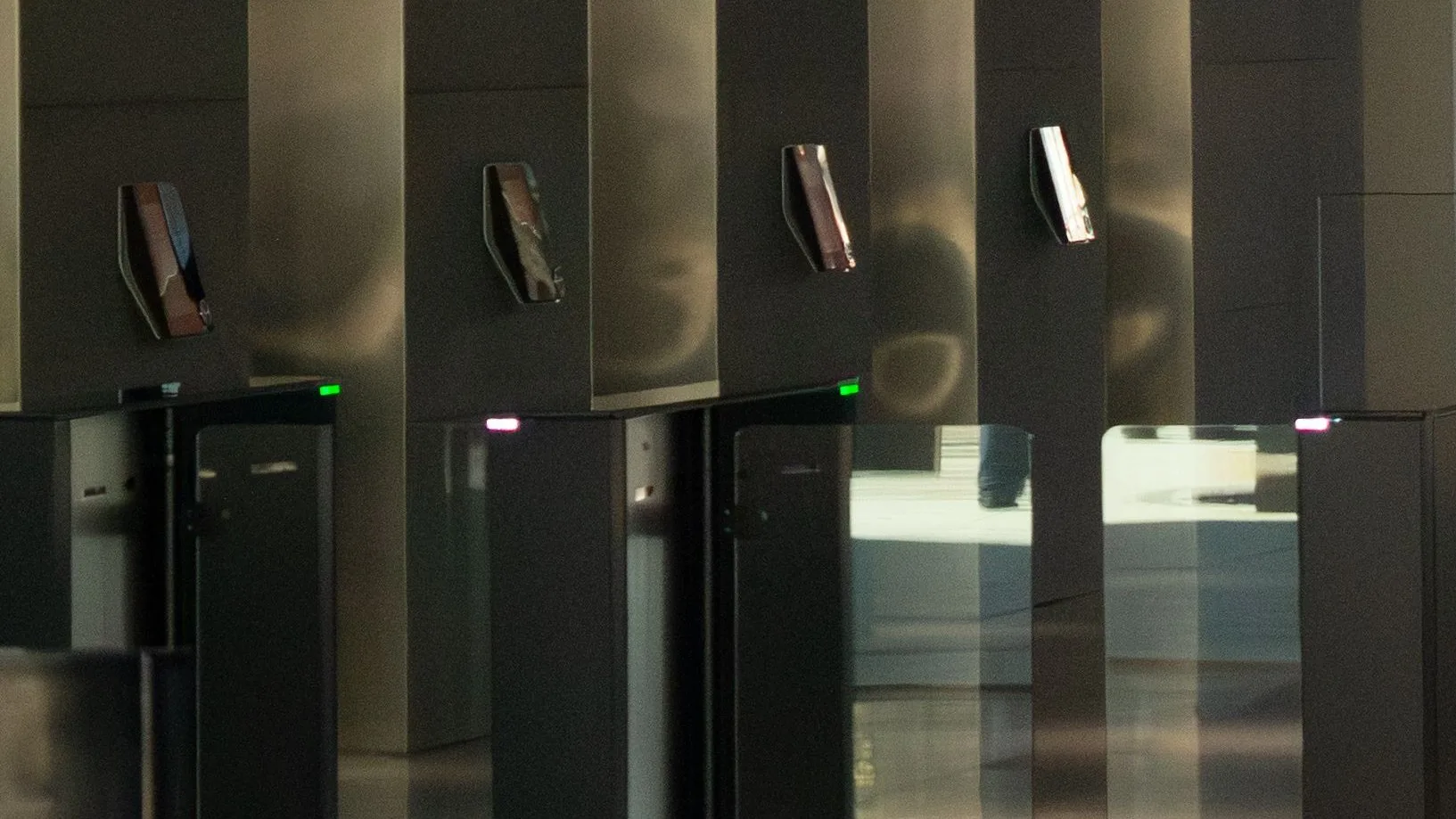
What is an access control system?
An access control system is an electronic security solution that controls who can enter and exit specific areas of a building or site. Rather than relying on physical keys, it uses programmable credentials such as cards, fobs, PIN codes, or biometrics to grant or restrict entry at each door, gate, or barrier you need to control.
For UK businesses, the case over keys is clear. Credentials are issued and revoked in seconds. Time-based permissions let a contractor access certain areas only during agreed hours. Every entry event is logged with a timestamp for compliance or investigation. A lost card is cancelled instantly, not a trigger for recutting locks across the building.
From a single office entrance to a 400-door commercial estate, access control systems remove the security gaps that keys leave permanently open.
The biggest flaw with keys is that you can never really know who has a copy. A modern access control system gives you that control back.
Types of access control systems
| Best suited for | Typical application | Scalability | |
|---|---|---|---|
| Standalone | Simple single-door control | Small offices, outbuildings | Limited |
| Networked | Multi-door single-site management | Offices, schools, warehouses | Yes, within the network |
| Cloud-managed | Remote multi-site administration | Retail chains, multi-site estates | Highly scalable |
| Integrated | Unified security system response | Healthcare, prisons, high-security | Yes, with partner systems |
Key features to look for in a business access control system
Not all access control systems offer the same depth of functionality. When evaluating options for your business, prioritise these six areas:
- User permissions: Granular control over time-based or zone-based access rights for individuals or groups, including temporary credentials for contractors and visitors.
- Credentials: Support for cards, fobs, mobile credentials, PIN codes, or biometrics depending on your security requirements and user preferences.
- Audit trails: A tamper-evident log of every access event, timestamped and exportable for compliance or insurance purposes.
- Remote management: The ability to add, remove, or modify access rights without travelling to site.
- Integration: Compatibility with CCTV, intruder alarms, and fire systems for a coordinated security response.
- Emergency behaviour: Clearly defined fail-safe or fail-secure door modes that comply with fire escape requirements under UK building regulations.
What a commercial access control system includes
- Controllers: The central processing unit that receives credential data and makes access decisions at each door.
- Readers: Hardware mounted at the door that reads cards, fobs, mobile credentials, or PIN entries from users.
- Electronic locks: Magnetic, electric strike, or solenoid locks that release when the controller grants access.
- Door contacts: Sensors that detect whether a door is open or closed and flag forced-entry or held-open events.
- Exit buttons: Request-to-exit devices that allow free egress from the secure side without triggering an alarm.
- Management software: The interface used to configure users, view audit logs, and manage access rights across the site.
- Power supplies: Dedicated units with battery backup that keep the system running during a mains power failure.
Door access control systems for different sites
The right commercial access control system varies considerably by sector and site type.
- Offices typically require tiered permissions that separate public reception areas from staff floors, server rooms, and executive zones.
- Schools need time-based lockdown capability and safeguarding-compliant visitor management at main entry points.
- Healthcare sites often combine door access control with nurse call integration and detailed door monitoring across large footprints. Centurion has managed over 440 access control doors across NHS premises.
- Warehouses prioritise vehicle access and perimeter control for high-value stock.
- Leisure venues need high-throughput credential reading at public entrances alongside secure back-of-house access.
- Multi-site estates benefit most from cloud-managed systems, which let a single administrator manage user permissions across all locations without needing to be on site.
What happens during access control system installation?
A professional access control system installation follows a structured process from first contact to ongoing maintenance.
- Survey: An engineer visits to assess door types, entry points, cabling routes, and the physical security requirements of the building.
- Design: A system design is produced specifying hardware, software, and configuration to suit the site.
- Installation: Engineers fit readers, controllers, electronic locks, cabling, and ancillary devices including door contacts and exit buttons.
- Commissioning: Every door is tested to confirm correct operation, including fail-safe behaviour and integration with fire or alarm systems.
- Training: Users and administrators are shown how to manage permissions, run reports, and respond to access events.
- Maintenance: A servicing schedule is agreed at handover, with remote diagnostics available between visits.
Common mistakes to avoid
Poor door assessment, credentials left active when staff leave, fire escape compliance overlooked, and no maintenance plan are the four most common reasons a well-specified access control system underperforms.
How to choose the right access control system for your business
Choosing the right system starts with an honest assessment of your site. A small business with a single entrance and a modest headcount has very different needs from a multi-site estate with hundreds of users and distinct security zones across each location.
For simple requirements, a cost-effective standalone or small networked system is usually the right answer. For sites expected to grow, or that require integration with CCTV, intruder alarms, or fire systems, a scalable cloud-managed platform will serve better over time. If your IT infrastructure needs to interact with physical access, factor in network access control requirements at the planning stage.
The technology matters, but installer competence matters just as much. An experienced commercial access control installer with a genuine maintenance commitment is the difference between a system that works and one that creates new problems six months after handover.
Access control system FAQs
Common questions from UK businesses planning an access control installation.