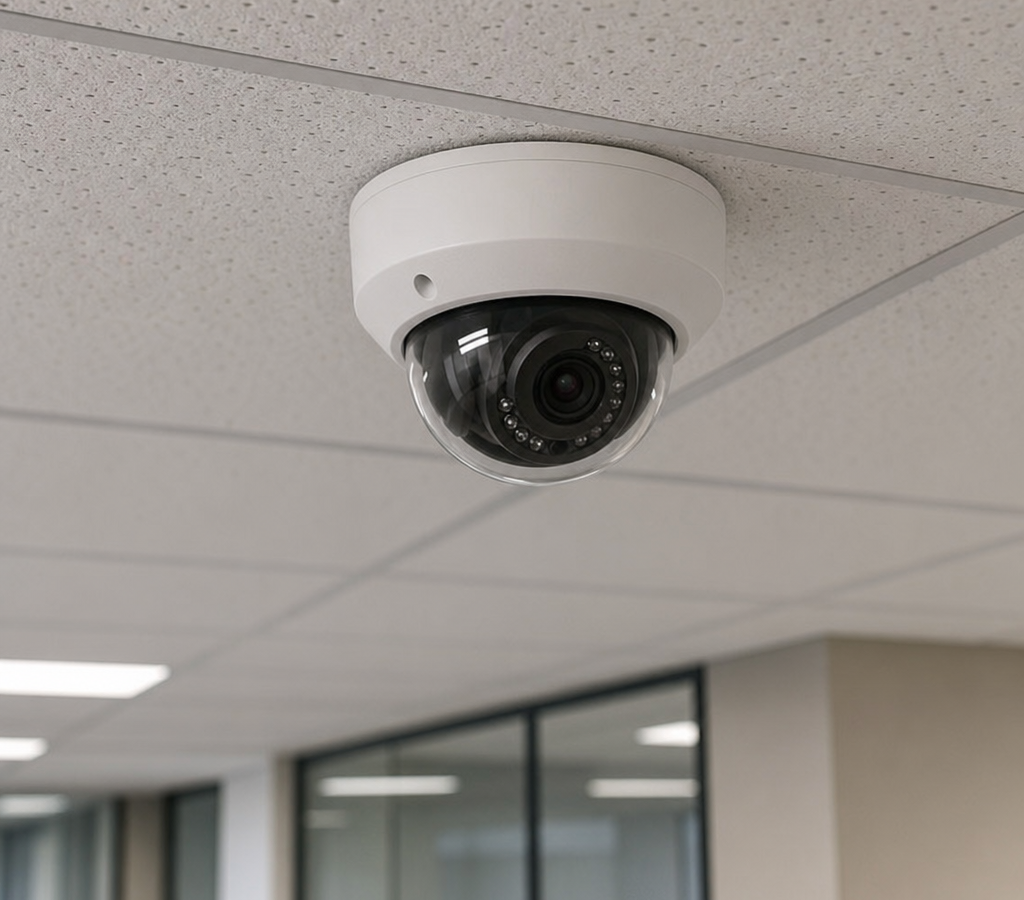
What Employers Need to Know
Installing CCTV in the workplace is a highly effective way to protect your premises, safeguard your assets, and support the wellbeing of your staff with modern security cameras. However, the decision to monitor employees is not one that should be taken lightly. In the UK, businesses are governed by the Data Protection Act 2018 and the UK General Data Protection Regulation (UK GDPR).
Navigating the line between corporate security and employee privacy rights can be tricky. This guide explains what UK employers need to consider when setting up and managing a lawful, fair, and effective video monitoring system.
Why Invest in Workplace Surveillance?
Modern businesses use security cameras for a range of valid reasons. Upgrading your infrastructure and improving site safety with network cameras can help protect staff from external intruders and physical threats.
Retailers, warehouses, offices, and industrial sites may also rely on CCTV to help prevent theft, investigate incidents, and protect high-value assets. By deterring dishonest behaviour and supporting evidence gathering, video security can reduce risk and support better operational control.
Modern technology also offers practical convenience. Cloud-based office monitoring can reduce reliance on physical on-site servers that can be tampered with or destroyed. Instead, authorised managers can securely review footage off-site, making remote-access business surveillance systems especially useful for multi-site operations and hybrid working environments.
The UK Legal Landscape: Balancing Security and Privacy
Because CCTV captures images of identifiable people, the footage is classed as personal data. The Information Commissioner’s Office (ICO) therefore expects employers to have a clear, justifiable reason for filming.
Completing a DPIA
Before starting any CCTV installation, the ICO strongly recommends carrying out a Data Protection Impact Assessment (DPIA). This assessment helps you identify why the cameras are necessary, the privacy risks to staff, and the steps you will take to reduce those risks. Skipping this step can leave a business exposed if an employee raises a privacy complaint.
Updating Your Staff Handbook
To remain compliant, your business should document workplace monitoring requirements in a clear CCTV policy. This policy should explain why cameras are installed, who can access the footage, how long recordings are stored, and how employees can request access to recordings of themselves through a Subject Access Request.
Navigating Employee Privacy and Trust
While employers have a right to protect their business, staff also have a reasonable expectation of privacy at work. Cameras should not be installed in spaces where privacy is expected, such as toilets, changing rooms, break rooms, and prayer facilities. Placing cameras in these locations is highly intrusive and is likely to breach core UK data protection principles.
It is also important to consider the effect monitoring can have on staff. A workplace that feels like a surveillance environment can damage morale, increase stress, and reduce trust. Being transparent and explaining why CCTV is necessary for safety and security, rather than simply monitoring productivity, helps create a more positive culture.
Key Rules for Installation and Operation
When setting up a workplace CCTV system, employers need to follow several practical rules from the outset. Camera placement, system configuration, signage, and access permissions should all be planned before installation begins.
Transparency and Signage
The question of covert cameras versus visible security systems is usually settled by UK data protection expectations: transparency is almost always required. Hidden cameras are rarely justifiable and should only be considered in highly specific, serious circumstances, such as a police-supported investigation into criminal activity.
In most cases, you must install clear warning signs for business cameras. These signs should be visible and legible, state that CCTV is in operation, and include the contact details of the organisation managing the system.
Audio Recording: A Step Too Far?
Employers often ask whether they can record audio in the office. In the UK, the answer is generally no. Audio recording is more intrusive than video because it can capture private conversations unrelated to work or security. Unless your organisation operates in a narrow setting where audio recording is legally required, audio should be disabled on workplace cameras.
Managing and Using CCTV Footage
Recording footage is only part of the compliance picture. Employers must also manage, access, retain, and delete footage in a lawful way.
Disciplinary Procedures
A common pitfall is using video evidence for disciplinary procedures without prior warning. If CCTV is installed primarily to prevent break-ins, employers should not suddenly use that footage to discipline an employee for unrelated conduct unless this use has been made clear in advance. If footage may be used for performance or disciplinary matters, that must be explicitly stated in workplace policies.
Safe Storage and Deletion
Footage should only be kept for as long as necessary to fulfil its original purpose. For many standard offices, a retention period of 14 to 30 days is usually sufficient. After that period, the system should automatically overwrite or permanently delete older files. Footage should be stored securely, encrypted where possible, and only accessible by trained, authorised personnel.
Final Thoughts
A robust CCTV system can provide clear benefits for protecting business assets, supporting staff safety, and investigating incidents. However, employers in the UK must balance those benefits against the privacy rights of their team.
By maintaining transparency, following UK GDPR principles, documenting your reasons for monitoring, and keeping communication open, you can create a safer and legally compliant workplace where CCTV supports security without undermining trust.
Yes. Before installing cameras, the ICO strongly recommends carrying out a DPIA. This helps confirm there is a clear, justifiable need for CCTV, identify privacy risks to staff, and document how those risks will be reduced.
A CCTV policy should explain why CCTV is used, who can access footage, how long recordings are kept, and how employees can make Subject Access Requests. If footage may be used for performance or disciplinary matters, the policy should say so clearly before that footage is relied on.
Cameras should be placed only where there is a clear business need. Avoid locations where employees have a full expectation of privacy, including toilets, changing rooms, break rooms, and prayer facilities. Camera placement should also minimise capture of neighbouring properties and unnecessary private areas.
Covert cameras are rarely justifiable. UK expectations favour transparency, so visible cameras and clear signage should be used in almost all workplace settings. Hidden cameras should only be considered in serious, specific circumstances and with appropriate legal advice.
Generally, no. Audio recording is usually more intrusive than video because it can capture private conversations unrelated to work or security. Unless there is a narrow and legally justified reason to use audio, it should be disabled.